Pearl Shapes Explained: Round, Oval, Drop, Button, Baroque & More
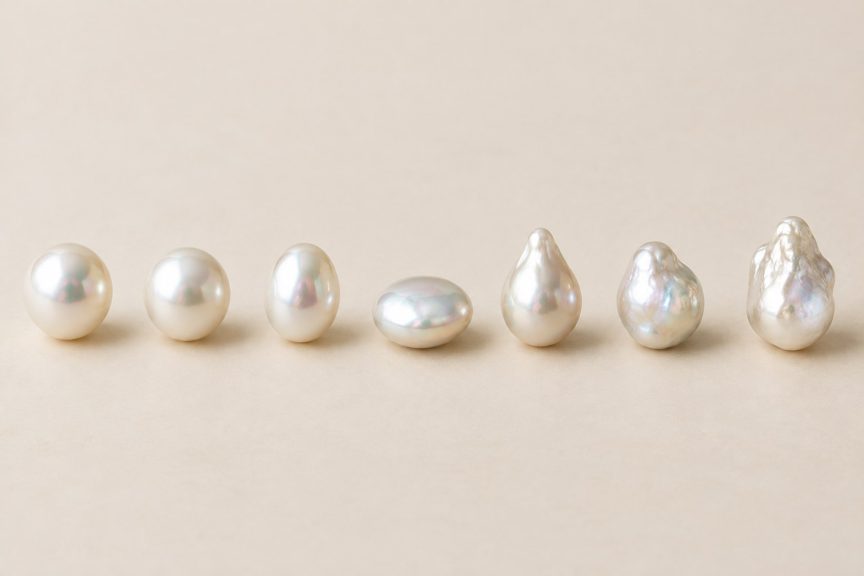
Pearl shapes range from round and near-round to oval, button, drop, semi-baroque and fully baroque. Shape changes how a pearl catches the light, moves in jewelry and relates to the wearer—but it is only one part of quality.
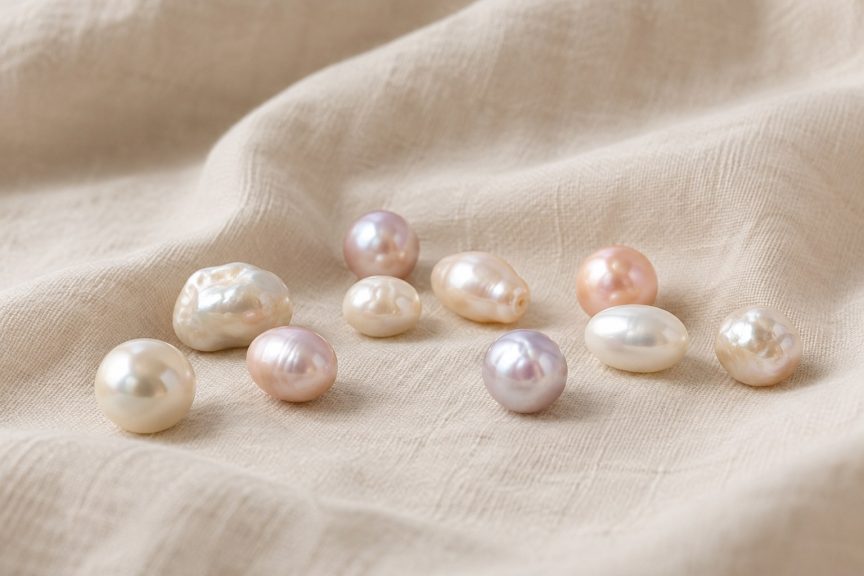
Terminology is not perfectly consistent across the trade. A useful gemological framework groups shapes as spherical, symmetrical or baroque. Within those families, sellers may use additional descriptive names such as pear, coin, rice, stick or petal. The outline matters more than forcing every pearl into a marketing label.
Why do pearls form in different shapes?
A pearl forms as a mollusk deposits layers of pearl material around a developing centre. The shape of that centre, the position of the pearl sac, movement during growth, the mollusk species and cultivation method can all influence the final outline.
Even when cultivation is carefully managed, the process remains biological. Two pearls from the same harvest can differ in symmetry, surface and proportion. Those differences may be selected for close matching or used deliberately in a more organic handmade design.
The three broad shape families
Spherical
Round and near-round pearls belong to the spherical family. Round pearls show no obvious variation from a sphere to the unaided eye. Near-round pearls are only slightly elongated or flattened.
Symmetrical
Oval, button and drop shapes have a recognisable axis of symmetry. They are not spherical, but the two sides feel balanced around a central line.
Baroque
Baroque pearls have no apparent symmetry and follow irregular, free-form outlines. Semi-baroque pearls sit between the symmetrical and fully baroque groups: they may be off-round or only slightly irregular.
For a closer look at formation, value and handmade use, read our guide to baroque pearls.
Round pearls
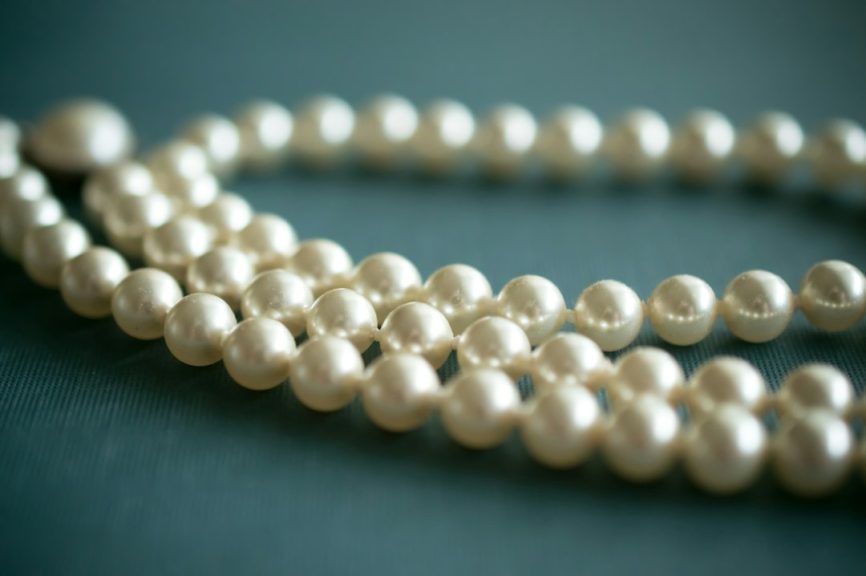
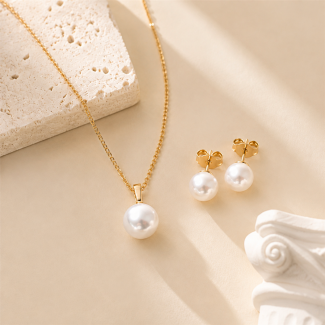
Round pearls appear evenly spherical. Perfect roundness is rare, so round pearls are often more valuable when other quality factors—such as lustre, surface, colour and nacre quality—are comparable.
Their even outline creates a formal, continuous rhythm in strands and a classic balance in stud earrings. Round does not automatically mean high quality: a round pearl can still have weak lustre, thin-looking nacre or serious surface damage.
Near-round pearls
Near-round pearls look round at first glance but show a slight flattening or elongation when turned. They can offer much of the visual balance of a round pearl while retaining a subtle natural character.
Because the difference can be small, photographs from more than one angle are useful. The term should describe the visible pearl rather than serve as a vague substitute for “almost perfect.”
Oval pearls
Oval pearls are rounded and elongated with a balanced outline. They can create a soft vertical line in earrings and pendants or an elegant repeating rhythm in a strand.
Trade descriptions such as “rice-shaped” may refer to narrower ovals, but these labels are not always standardised. Check the actual measurements and photographs.
Button pearls
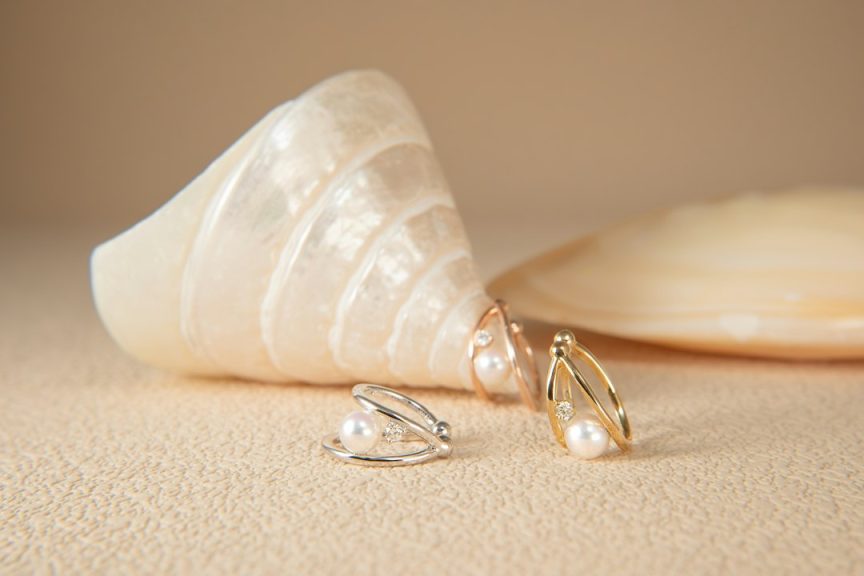
Button pearls are rounded but visibly flattened. From the front, they can appear almost round; from the side, their lower profile becomes clear.
This shape works especially well in stud earrings because it can sit closer to the ear. Button pearls also suit rings and compact pendants where a lower profile is useful, although those pieces still need protection from impact and abrasion.
Drop and pear-shaped pearls
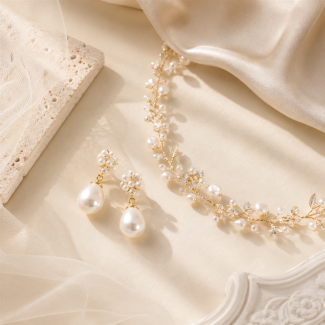
Drop pearls taper toward one end and are balanced around a vertical axis. Some sellers distinguish a rounded drop from a more pointed pear shape, while others use the terms more loosely.
A well-balanced drop is prized for earrings and pendants because gravity naturally emphasises its line. In a pair, the pearls do not need to be mathematically identical, but their length, width, colour, lustre and visual weight should feel harmonious.
Semi-baroque pearls
Semi-baroque pearls are only partly irregular. They may resemble an off-round, slightly uneven oval, button or drop. This category is useful because not every pearl that departs from perfect symmetry is fully baroque.
Semi-baroque forms can feel quietly individual without becoming strongly sculptural. They are often easy to wear and can be matched in pairs while preserving small differences.
Baroque pearls
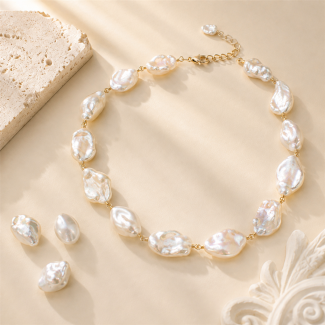
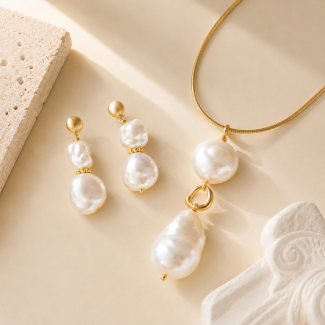
Baroque pearls have no apparent symmetry. Their contours may be curved, ridged, flattened, elongated or free-form. A baroque shape does not indicate whether a pearl is freshwater or saltwater, natural or cultured, high quality or low quality.
The strongest examples combine an appealing outline with lively lustre and sound surface condition. Natural ridges can be part of the character; deep cracks, peeling or damaged drill holes are separate concerns.
What does “circled” mean?
Circled pearls show one or more grooves or rings around their circumference. “Circled” can be treated as a shape description in retail language, but in some gemological systems it modifies another underlying shape. A pearl may therefore be both circled and drop-shaped, or circled and baroque.
This is a useful example of why pearl shape terminology can vary. Clear photographs are often more informative than the label alone.
What about coin, stick, petal and other names?
Freshwater pearl jewelry often uses descriptive trade names for distinctive forms:
- Coin: broad and flattened, usually roundish rather than spherical.
- Stick: narrow and elongated, often irregular.
- Petal: thin, broad and organically edged.
- Keshi: a term connected to pearl formation rather than a guaranteed shape; keshi pearls are often irregular, but “keshi” should not be used as a simple synonym for baroque.
These names can help readers picture the pearl, but their use is not always uniform. Measurements and multiple images should support the description.
Does shape determine pearl quality?
No. Shape is one of several value factors. Pearls are also considered for size, colour, lustre, surface, nacre quality and matching.
Round pearls are rare and often command a premium, but an oval, drop or baroque pearl with exceptional lustre and an attractive form can be highly desirable. The design should also be considered: a sculptural pearl may be more suitable for an expressive handmade pendant than a perfectly round one.
How shape changes the look of jewelry
- Round and near-round: balanced, classic and visually consistent.
- Oval: soft, elongated and versatile.
- Button: compact and close-fitting.
- Drop or pear: graceful movement and a vertical line.
- Semi-baroque: gently individual without strong asymmetry.
- Baroque: sculptural, expressive and visibly one of a kind.
Size changes the effect as much as shape. A small baroque pearl may look delicate, while a large round pearl can make a bold focal point. See our pearl size guide for that second dimension.
How to choose a pearl shape
Begin with the way the piece will be worn:
- Decide whether you want a classic rhythm or visible individuality.
- Look at the pearl from the front and side, not only in one styled image.
- Check the dimensions in millimetres, especially for non-round shapes.
- For pairs, compare visual balance rather than demanding exact duplication.
- Assess lustre and surface condition separately from shape.
In handmade jewelry, the maker’s selection matters. A thoughtful design can use a small difference in curve, colour or proportion to create balance rather than conceal the material’s natural character.
For more guidance on pearl types, sizes and natural variation, visit our Pearl Guide library.
Frequently asked questions
What is the rarest pearl shape?
Perfectly round pearls are rare and often more valuable when other factors are equal. Rarity also depends on pearl type, size and quality, so shape alone does not determine scarcity.
Are oval pearls baroque?
Not if the oval is visibly symmetrical. An irregular oval may be described as semi-baroque or baroque depending on how much symmetry it retains.
Which pearl shape is best for earrings?
Round, button, oval and drop pearls all work well. Choose button shapes for a close-fitting stud, drops for movement, or baroque forms for a more individual pair.
Are circled pearls baroque?
Some are, but “circled” describes rings or grooves and can modify several shapes. A circled pearl may still have a drop, oval or baroque outline.