How to Store Gemstone Jewelry Safely and Prevent Damage
Store gemstone jewelry in a clean, soft-lined space where each piece is protected from harder stones, sharp metal edges, tangles and pressure. Separate compartments or individual pouches are usually safer than a shared pile, even when every piece looks smooth.
Good storage also considers the gemstone itself. Hardness does not describe resistance to every kind of damage, and some stones or treatments are sensitive to heat, strong light, low humidity, moisture or chemicals. If you do not know the material or treatment, choose a stable indoor location and a conservative, separate setup.
What damages jewelry while it is stored?
Jewelry does not have to be worn to be damaged. Movement inside a drawer or travel case can rub one piece against another. Heavy items can press on raised settings, chains can knot, and earring posts can scratch nearby stones.
The storage environment matters too. Direct sunlight, a radiator, a damp bathroom or a very dry safe can be unsuitable for particular materials. Residue from perfume, lotion or perspiration may also remain against a stone or metal surface when a piece is put away without being checked.
Plan storage by material and construction
Do not arrange jewelry only by value, colour or occasion. Think about which surfaces can scratch one another and which designs can catch, bend or crush.
Hardness measures resistance to scratching, not resistance to chipping or fracture. Sapphire is harder than quartz, garnet, moonstone, opal and turquoise, so loose sapphire jewelry can mark those softer materials. Yet a sapphire with exposed points or a loose setting still needs protection from impact and pressure.
Construction can be just as important as the gemstone:
- Prongs and earring posts can scratch adjacent pieces.
- Raised cabochons can be pressed or knocked.
- Chains can tangle around settings and bead strands.
- Glue-set or inlaid elements should not be compressed.
- Fractured, filled or coated stones need protection even if the underlying gem is relatively hard.
Choose a soft-lined jewelry box or individual pouch
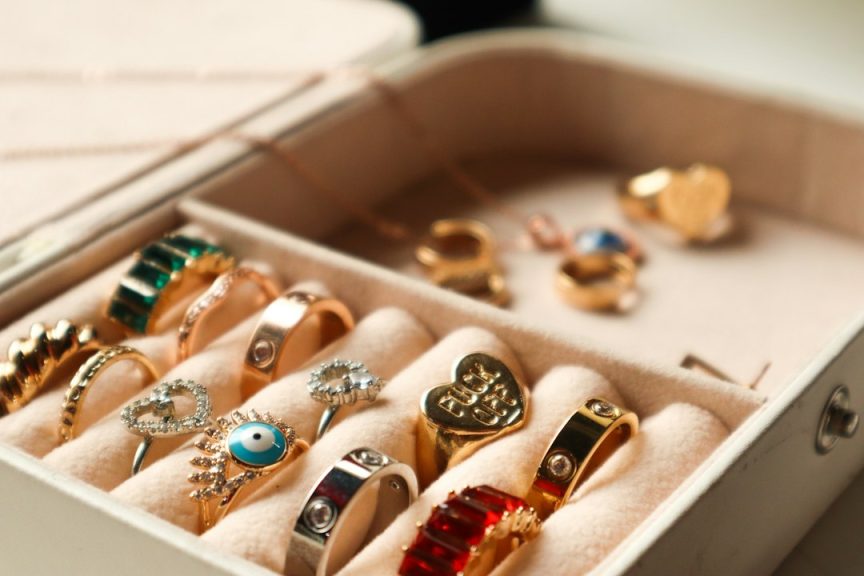
A jewelry box with clean, padded compartments makes it easier to control contact. Choose spaces that fit the pieces without forcing them against dividers or closing the lid onto raised stones.
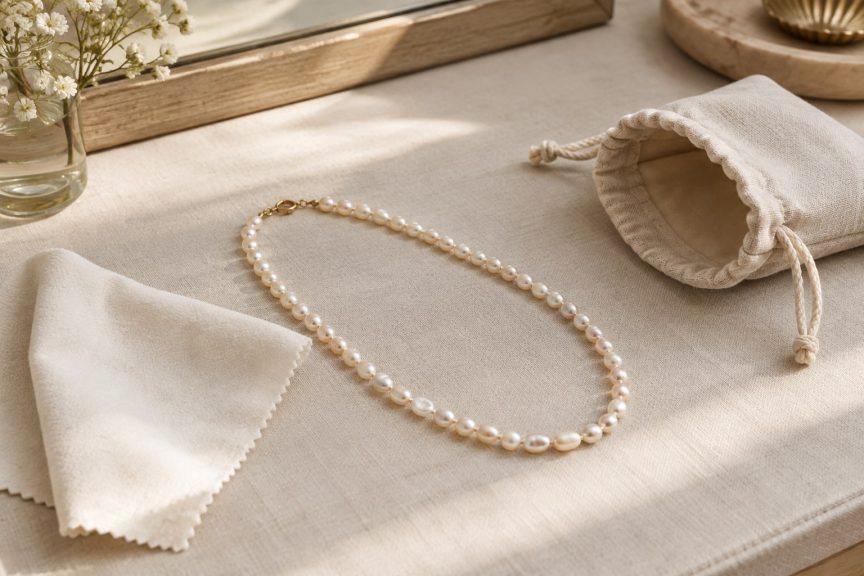
Soft fabric pouches are useful when compartments are limited. Ideally, place one piece in each pouch. Check that the lining is clean: dust and grit can be abrasive, and a soft-looking fabric is not protective if particles are trapped inside it.
Avoid bare drawers, hard trays and containers with rough seams or exposed zippers. Tissue paper can tear and does not reliably prevent pressure. For long-term storage, use materials intended for jewelry rather than improvised wrapping that may contain dyes, adhesives or unknown chemicals.
Separate harder and softer gemstones
Pieces should not touch simply because they share the same box. Diamonds and sapphires can scratch many other gems, while quartz dust or grit can mark softer surfaces. Place gemstone rings in individual padded slots and keep loose earrings from moving across nearby stones.
Consider these examples:
- Sapphire: keep it from contacting quartz, garnet, moonstone, opal, turquoise and softer materials.
- Quartz and garnet: separate them from harder gems and from one another if facets or settings can rub.
- Moonstone: cushion it against knocks because its cleavage and poor toughness make impact a concern as well as scratches.
- Opal: protect it from abrasion, pressure, heat and an excessively dry environment.
- Turquoise: keep it away from cosmetics, fragranced products and materials that may transfer oils or dyes.
- Emerald: avoid pressure on the stone and store away from heat or chemicals that may affect fracture fillers.
When one piece combines several gemstones, follow the needs of the most sensitive material and protect the whole setting.
Keep chains controlled without pulling them tight
Fasten necklace and bracelet clasps before storage, then lay chains in a relaxed line or broad curve. This reduces tangling without placing the chain under tension. Very fine chains may benefit from their own narrow compartment or a pouch that limits movement.
Keep pendants from sliding repeatedly along a chain during travel. If a pendant can be removed safely, storing the parts separately may reduce rubbing; otherwise, position the pendant so the chain does not wrap tightly across the gemstone.
Do not hang heavy necklaces or beaded strands for long periods unless their construction is designed for it. Continuous pull can strain thread, wire and connections.
Protect rings, earrings and raised settings from pressure
Use padded ring slots that hold the metal shank without pressing neighbouring stones together. Oversized or high-set rings may need their own compartment rather than a crowded row.
Store earrings so that posts and backs cannot touch gemstone surfaces. Pairs can share a small section only when the design keeps the metal parts controlled and the stones apart.
Do not stack trays or heavy pieces on top of delicate cabochons, inlay, clusters or wirework. Before closing a box, check that the lid clears every raised setting.
Choose a stable place away from heat and strong light
Keep the jewelry box in a stable indoor location away from direct sunlight, radiators, fireplaces and hot windows. Heat and sudden temperature changes can damage some stones or affect fillers and adhesives.
Extended intense light can alter certain gem colours. Some amethyst can fade, for example. Closed storage helps, but avoid placing even a closed box where it becomes hot in the sun.
Moonstone can be affected by high heat or sudden temperature change. Opal also needs protection from heat and very dry conditions. Sapphire and many garnets are more stable under normal conditions, but their settings and any treatments still require consideration.
Be careful with moisture—and with overly dry storage
Do not put jewelry away while it is damp. Moisture can remain beneath settings, inside drill holes, around adhesive or in stringing material. Blot accidental water with a soft cloth and allow the piece to dry naturally before closing it in a pouch or box.
A bathroom is usually a poor storage location because humidity and temperature change repeatedly, and toiletries can spill or become airborne nearby.
At the other extreme, very dry storage may be unsuitable for opal and pearl. Do not try to correct this by soaking the jewelry or placing it in water. For a valuable opal, especially in a safe or vault, ask a knowledgeable jeweler about an appropriate stable environment. Pearl owners can follow our separate guide to storing pearls properly.
Store treated and coated stones with extra care
Fracture-filled, dyed, impregnated and coated gemstones may have different sensitivities from untreated material. A thin surface coating can scratch along facet edges; a filler may be affected by heat or solvents; a dyed porous stone may change after contact with moisture or chemicals.
Keep treatment disclosures and laboratory reports with your records rather than inside a pouch where paper edges or staples could contact the jewelry. If the treatment is unknown, use a soft individual compartment in a stable environment and avoid anti-tarnish chemicals touching the gemstone directly unless their compatibility is confirmed.
Inspect each piece before it goes away
Storage is a useful moment for a quick check. Under good light, look for:
- A stone that moves or sounds loose
- A raised or worn prong
- A fresh chip or abrasion
- A bent post, clasp or chain link
- Stretched thread or wire
- Visible adhesive or a shifting inlay
- Residue that should be assessed before long-term storage
Do not place a damaged piece back into rotation. Keep it protected and separate until a qualified jeweler can inspect it. For daily wearing habits, water, cosmetics and settings, read how to care for gemstone jewelry.
Prepare jewelry for long-term storage
- Identify the gemstone and any disclosed treatment.
- Check that the piece is clean enough for storage using a method appropriate to its materials.
- Make sure it is completely dry.
- Fasten clasps and support the piece without tight bends.
- Place it in an individual soft compartment or pouch.
- Keep documentation nearby but not rubbing against the jewelry.
- Choose a secure location with stable temperature and suitable humidity.
- Recheck valuable or delicate pieces periodically rather than leaving them untouched for years.
A security safe can be appropriate, but it does not replace protective packaging or material-specific environmental care. Avoid overcrowding, direct contact and excessive dryness for moisture-sensitive materials.
How to pack gemstone jewelry for travel
Use a structured travel case with small padded compartments so pieces cannot migrate when the bag moves. Place one item in each section, secure earrings, fasten chains and keep heavy jewelry away from raised or fragile stones.
Do not drop several pouches into a larger bag unless the pieces are also protected from impact and pressure. Carry valuable or sentimental jewelry with you rather than in checked luggage, and inspect settings after travel before wearing the piece.
A practical storage checklist
- Separate: prevent stones and metal edges from touching.
- Support: avoid pressure, sharp bends and long-term tension.
- Soften: use clean padded compartments or individual pouches.
- Stabilize: stay away from direct sun, heat and rapid environmental changes.
- Dry: never close damp jewelry into a container.
- Document: retain treatment information for future care and repair.
- Inspect: set aside anything loose, chipped or bent.
Explore more material-specific cleaning, storage and everyday guidance in our Jewelry Care Guide.
Frequently asked questions
Can different gemstones share one jewelry box?
Yes, if each piece has its own padded compartment or pouch. A shared open section allows harder stones, prongs, posts and chains to scratch or catch softer pieces.
Are plastic bags safe for gemstone jewelry?
A clean, suitable bag may help with short-term organisation, but it does not protect well from pressure and can trap moisture if the piece is damp. For regular or long-term storage, a soft-lined compartment or purpose-made pouch is usually more protective.
Should I put silica gel in a jewelry box?
Do not add a drying agent automatically. Very low humidity can be unsuitable for moisture-sensitive materials such as opal and pearl. Use environmental controls only when you understand the needs of every material in the box.
Is the original jewelry box always the best place?
It can be a good choice if it is clean, soft-lined and large enough that the lid and fittings do not press on the piece. Replace or reline a box if the interior has become rough, dusty or degraded.
How should I store gemstone jewelry when the treatment is unknown?
Keep it separate in a clean, soft compartment away from heat, strong light, chemicals and moisture. Do not add anti-tarnish products directly beside the stone or attempt a deep clean until a qualified professional can advise on the material.